

Adapted from a presentation by Tom Sanders, CEO at SHEPHERD, in collaboration with Lithgow City Council, at the IPWEA NSW & ACT State Conference, held in April 2026 in the Hunter Valley.
Every council knows its road network needs work. But just how much?
For the council leaders accountable for answering that question, the harder questions quickly follow: Where are the greatest risks? What should come first? What can realistically be funded? And how can those priorities be clearly explained to engineering teams, finance, councillors and the community?
That was the challenge Lithgow City Council set out to address as it looked to take a more proactive and long-term approach to managing its road network.
Like many regional councils, Lithgow is operating in a complex environment. Climate change, financial sustainability, changing local economies and rising community expectations are all placing pressure on infrastructure decisions.
Responding to that kind of pressure requires more than a list of roads and defects. It requires a shared understanding of the network, the trade-offs involved and the long-term consequences of investment decisions.
Building a clearer network picture
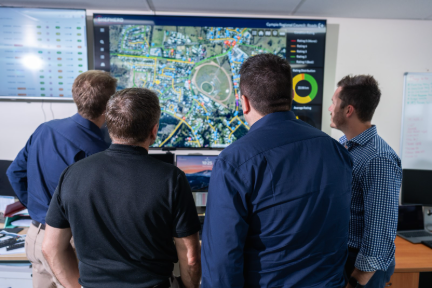
Lithgow commissioned a RACAS® survey across more than 1,200 kilometres of sealed and unsealed roads to better understand the condition and performance of its network.
The aim was not simply to collect more data. It was to establish a reliable network view that could support practical prioritisation, funding and long-term planning.
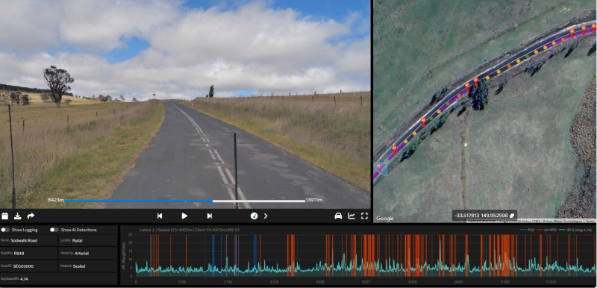
The work combined road imagery, targeted visual inspections, standardised condition scoring, treatment identification and geospatial reporting. Together, these outputs created an evidence base that could be used not just by technical teams, but by decision-makers across the broader organisation.
The RACAS® outputs now support:
- A prioritised 10-year road renewal program
- Targeted investigation and testing
- DRFA damage review
- Forward budgeting aligned with depreciation and condition-based need
This kind of baseline matters because road management decisions are rarely just technical. They are also financial, strategic and political, and they ultimately need to be understood and explained.
Councils need to be able to show why one road is prioritised over another, why some work needs to be deferred and what the long-term consequences of underinvestment may be.
The real value is not just the data
The most important outcome of the work was not simply that Lithgow had more information. It was that the information created a common evidence base and helped change the conversation.
Engineering teams could move beyond reactive works planning and look at the network more strategically. Finance teams gained clearer visibility of funding needs based on physical condition, rather than relying only on historical budgets or depreciation figures. Councillors were able to engage with a more complete picture of the network, including the trade-offs between local priorities and whole-of-network outcomes.
This is where road condition data becomes most valuable: when it gives people a shared reference point for the decisions that need to be made.
Without that shared view, different parts of council can easily be working from different information and assumptions. Engineering may hold detailed technical information. Finance may be working from forecasts that do not fully reflect physical condition. Elected members may be responding to community concerns without visibility of broader network risk and competing priorities.
A network lens helps bring those perspectives together and provides a clearer line from condition evidence to priorities, budgets and decisions.
Moving beyond road-by-road conversations
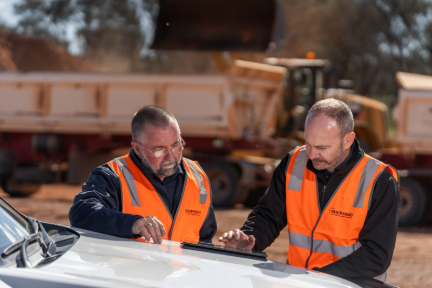
One of the biggest shifts for any council is moving from isolated road-by-road discussions to a more strategic view of the network.
This does not mean local issues become less important. It means they can be considered in context.
When condition, treatment need, risk and funding are visible across the network, councils are better placed to have informed and transparent conversations about service levels, renewal backlogs and long-term sustainability.
Those conversations are not always easy, but they are necessary.
For local government, the ability to align technical realities with financial constraints and community expectations is becoming increasingly important. Councils need practical tools and clear evidence, but they also need the organisational confidence to use that evidence in planning, budgeting and decision-making.
The objective is not more data for its own sake. It is a realistic road program that can be understood, funded, monitored and clearly explained.
At SHEPHERD, we use RACAS® to help regional council leaders establish a reliable view of their network, prioritise what matters and make road decisions they can confidently stand behind.
If your council needs greater clarity around road condition, renewal priorities or future funding requirements, SHEPHERD can help turn network evidence into a practical and defensible pathway forward. Contact us at info@shepherdservices.com.au
Key Takeaways
★ Road data should guide real decisions.
★ A network view changes the conversation. in business-as-usual.
★ Shared evidence connects council teams.
★ Condition data strengthens funding discussions.
★ Better visibility supports defensible priorities.