

Adapted from a presentation by Justin Fischer, General Manager – Client & Corporate at SHEPHERD, at the IPWC25 State Conference.
As natural disasters become more frequent and severe, councils are under growing pressure to restore services quickly, protect critical infrastructure and explain recovery decisions clearly.
For the council leaders accountable for roads, assets, budgets and community outcomes, disaster recovery is no longer just about responding after the event. It is about having the systems, evidence and processes in place before the pressure arrives.
Traditional asset management approaches can make that difficult, particularly when data is fragmented, inspections are reactive or recovery information is gathered only after damage has occurred.
Disaster-ready councils are doing something different. They are embedding preparedness into everyday asset management, so that when an event occurs, they are not starting from scratch.
Moving from reactive to ready
A disaster-ready approach does not treat recovery as a standalone process.
It connects business-as-usual asset management with the evidence needed for emergency response, funding submissions, reconstruction planning and long-term resilience.
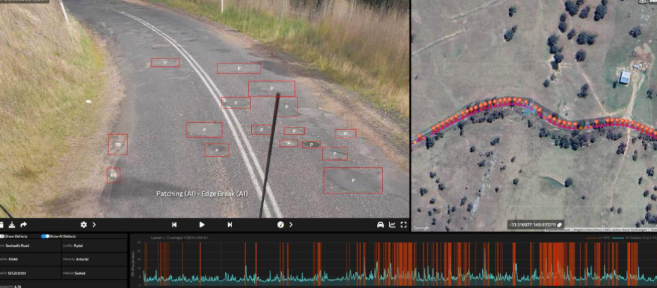
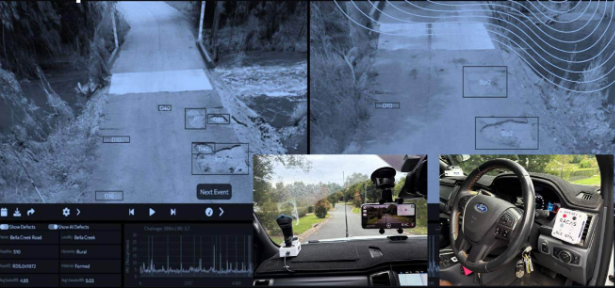
SHEPHERD’s approach brings together RACAS®, AI-supported assessments, cloud-based platforms and real-time data capture to help councils build a clearer picture of their network before, during and after an event.
This supports councils to:
- capture accurate, GPS-tagged condition data at scale
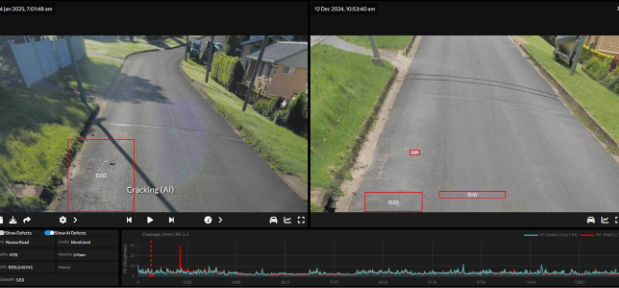
- identify damage quickly using AI-assisted defect detection
- connect evidence to DRFA processes and funding requirements
- maintain a single dataset that supports operations, recovery and planning
The value is not simply in having more data. It is in having the right information available when decisions need to be made quickly and explained clearly.
Real-time data when it matters most
During a disaster response, timing matters.
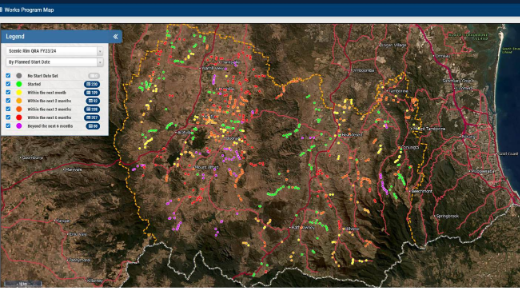
Councils need to understand where damage has occurred, which roads or assets are most critical, what works should be prioritised and what evidence is needed to support funding and delivery.
Real-time, spatially accurate data can materially improve that process.
During recent flood events, including deployments with Paroo Shire Council and Bulloo Shire Council, RACAS® supported rapid damage identification, prioritisation of emergent works and early preparation of funding-ready submissions.
This type of visibility helps councils move from uncertainty to action.
It also gives teams a clearer way to coordinate across the field, office, contractors and decision-makers, reducing the risk of duplicated effort or missed evidence during the critical early stages of recovery.
Prepared systems reduce delay
Technology is only part of the story.
Councils that already have established systems, procurement pathways and data processes in place are often better positioned to mobilise quickly when an event occurs.
That matters because the early stages of recovery can be the hardest. Teams are stretched, communities need answers, access may be limited and funding requirements still need to be met.
When councils already know what information they need, where it sits and how it connects to recovery processes, they can spend less time rebuilding the baseline and more time progressing the response.
Preparedness reduces delay because it gives people a clearer starting point.
Beyond recovery
The benefits of disaster-ready asset management do not stop once the immediate recovery is complete.
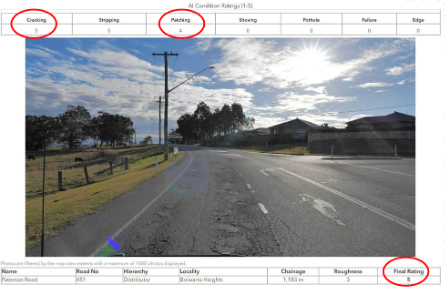
Current, high-quality condition data can also support more accurate budget forecasting, capital prioritisation, long-term financial planning, service-level conversations and audit confidence.
For councils, this creates a stronger connection between everyday asset management and long-term resilience.
The same data that helps support a DRFA submission can also help council leaders understand network condition, prioritise limited resources and explain infrastructure decisions to the community.
That is why disaster-ready asset management should not be seen as an emergency response activity. It is part of responsible, ongoing road and infrastructure leadership.
Stronger assets, stronger communities
At its core, disaster readiness is about helping communities recover faster and with greater confidence.
When councils have reliable data, practical systems and clear evidence before an event occurs, they are better positioned to protect access, restore services and maintain control of the recovery pathway.
They can act sooner, explain decisions more clearly and reduce the risk of delays caused by missing information or fragmented records.
At SHEPHERD, we support councils to connect road condition data, asset management, disaster recovery evidence and delivery planning through practical systems built for real-world decision-making.
If your council wants to build stronger disaster readiness into everyday asset management, SHEPHERD can help establish the evidence, systems and processes needed to support faster response, clearer decisions and more resilient communities. Get in touch at info@shepherdservices.com.au
Key Takeaways
★ Disaster readiness starts before the event.
★ One dataset can support many decisions.
★ Real-time visibility improves response.
★ AI can improve speed and safety.
★ Stronger assets support stronger communities.