

Adapted from a presentation by Tom Sanders, CEO at SHEPHERD, delivered with Isaac Regional Council at the IPWEA-QNT CQ/NQ Branch Conference, held in May 2026 in Rockhampton.
When a disaster hits, the strength of a council’s response often depends on work that happened long before the event.
For Isaac Regional Council, the ability to respond quickly and confidently in January 2026 was not built in the weeks after the disaster. It was built over years of disciplined, business-as-usual road management.
Managing extensive unsealed road networks across large regional areas is never simple. Councils are often balancing limited resources, changing road conditions, competing community expectations and increasing scrutiny from funding agencies.
In that environment, good road management needs to do more than record defects. It needs to create a repeatable and defensible picture of the network that council leaders can use to guide priorities, explain decisions and respond when conditions change.
The value of a reliable baseline
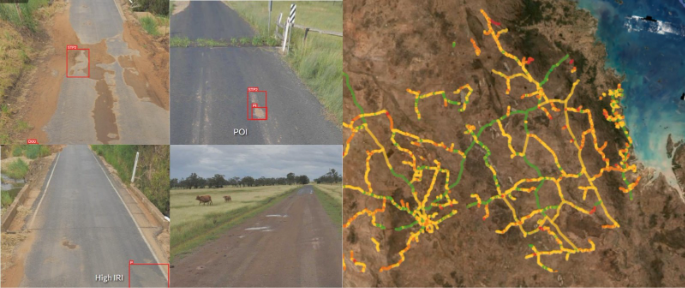
Over many years, Isaac Regional Council embedded structured network inspections and consistent condition assessments into its normal road management practices.
That approach created reliable records of asset condition that could be used for more than maintenance planning. It also supported service-level discussions, budget modelling and more transparent decision-making across the organisation.
More recently, Council worked alongside SHEPHERD to further strengthen this approach. The focus was not simply on collecting more data, but on making road information more useful, accessible and connected to the decisions Council needed to make.
That included:
- Improving automation
- Strengthening GIS alignment
- Refining intervention triggers
- Supporting more consistent grading decisions
- Improving reporting across the network
The result was clearer visibility of the unsealed network and a stronger connection between condition evidence, maintenance priorities and practical decision-making.
Just as importantly, Council retained an evidence base that could be relied on when decisions came under greater scrutiny.
Building trust through transparency
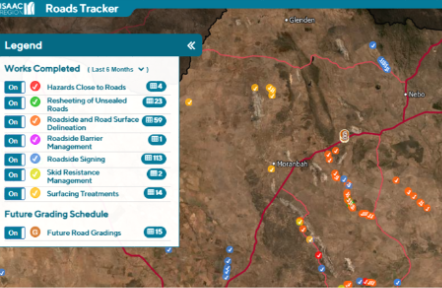
Mature road management is not only valuable for engineers and asset teams. It also helps councils communicate with their communities.
Through web-based mapping tools, residents can see how roads are assessed, how priorities are determined and how limited budgets are being allocated. This matters because unsealed road management can be highly visible and highly emotive. When communities understand the process, it becomes easier to explain why decisions are made.
Effective road management does not remove every challenge, but it does give councils a clearer and more consistent way to have those conversations.
When business-as-usual becomes disaster readiness
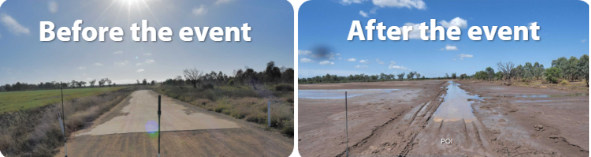
In January 2026, natural disasters impacted the Isaac region.
Because Council already had a defensible pre-event dataset and established road management processes, its disaster response could move quickly from reactive estimation to evidence-based comparison.
Within two weeks, 1,000 kilometres of post-event road data were captured. By comparing pre-event and post-event conditions side by side, Council could rapidly validate the location, extent and severity of damage across the network.
Within four weeks, approximately $20 million in disaster funding claims were prepared and submitted, supported by clear, timestamped and geo-referenced evidence.
That speed did not come from emergency improvisation or an attempt to reconstruct the evidence after the event.
It came from years of consistent road management practice and from maintaining the information, systems and processes needed to stay in control when the pressure increased.
Road management as strategic infrastructure
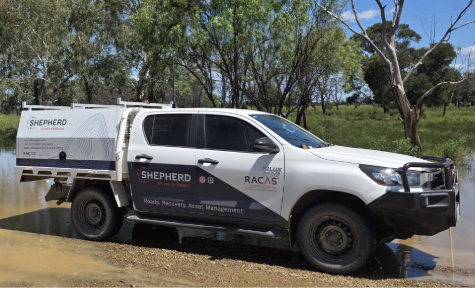
The Isaac example shows that mature, repeatable road management is not just an operational tool. It is a strategic capability.
When embedded into everyday practice, it can support better maintenance planning, improve community transparency, strengthen funding submissions and reduce financial and evidentiary risk during high-pressure disaster events.
It also gives the leaders responsible for the network greater confidence that they can explain what happened, demonstrate the basis for their decisions and respond with credible evidence when time matters.
For councils managing large unsealed networks, the lesson is clear: disaster readiness does not start when the rain stops. It starts with the systems, processes and evidence built into everyday road management.
At SHEPHERD, we work alongside councils to establish practical and defensible road management foundations that support clearer decisions, ongoing network control and a stronger response when disaster occurs.
If your council needs stronger road management foundations before the next event, SHEPHERD can help establish the evidence, processes and ongoing visibility needed to support both day-to-day operations and disaster response. Get in touch at info@shepherdservices.com.au
Key Takeaways
★ Disaster readiness starts in business-as-usual.
★ Disaster readiness starts in business-as-usual.
★ Mature road management reduces funding risk.
★ Transparency helps build community trust.
★ Isaac Regional Council submitted around $20M in claims within four weeks.