

Adapted from SHEPHERD’s Shooting for the Stars: Unsealed Roads Service Levels presentation.
Managing unsealed roads is one of the most visible and challenging parts of regional road management.
For Council, the pressure is constant. Communities want safer, smoother and more reliable roads. Maintenance crews are working with limited resources. Customer requests keep coming in. Budgets need to stretch across large networks, changing weather, variable road conditions and competing local priorities.
For councils managing large unsealed networks, good road management cannot rely only on who calls the most, who complains the loudest or which road has been discussed most recently.
Council leaders need a clear, explainable and repeatable way to decide what level of service different roads should receive, and why.
Why service levels matter
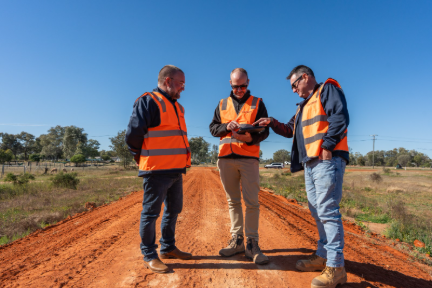
Unsealed roads are not all the same. Some carry higher traffic volumes, connect communities, support agriculture or tourism, provide school bus access or serve areas with greater safety risk.
Others may be lower-use roads that still need to remain accessible, but cannot reasonably receive the same maintenance standard as major links in the network.
Without a shared framework, this can create frustration for councils and communities. Inspection schedules, defect logging, works scheduling and work orders can become inconsistent or overly manual. Information can also sit across multiple systems, making it harder for leaders, field teams and customer service staff to work from the same view of the network.
A practical service level framework helps councils move from reactive maintenance to clearer prioritisation.
Using star ratings to guide decisions
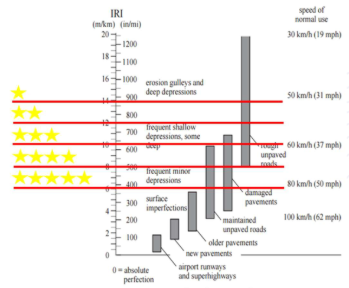
A star rating approach gives councils a simple and practical way to define service levels for unsealed roads.
The intent is not to make every road a five-star road. The intent is to match the service level to the role the road plays in the network. That means considering factors such as safety, traffic use, school bus access, regional significance, tourism, agriculture and the importance of the road to local communities.
A practical service level framework can help councils:
- Prioritise roads used by the majority, rather than only those attracting the most complaints.
- Keep community safety as the top priority.
- Set clear expectations for roads with higher-risk uses, such as school bus routes.
- Recognise roads that support regional economic activity.
- Support more equitable and cost-effective maintenance decisions.
This gives councils a more transparent basis for explaining why one road may receive a higher standard of maintenance than another.
It also helps connect road condition, community need, safety, budget and operational capacity into one decision-making framework.
Measuring what matters
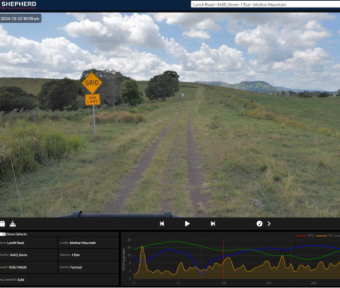
For unsealed roads, service level measures need to be practical.
They should support real maintenance decisions, not create another reporting burden for already stretched teams. Measures may include surface smoothness, defect response times, accessibility, gravel coverage, gravel depth and wet weather access.
The key is to collect information that is fit for purpose. Data should help council teams understand when a road is performing within its agreed service level, when intervention is required and when planned grading should occur. It should also support more consistent conversations about budgets, maintenance frequency and community expectations.
But data should not replace professional judgement. Road management still requires local knowledge, practical experience and an understanding of risk, cost, crew availability and changing conditions. The data helps inform those decisions and gives councils a stronger evidence base to explain them.
From framework to adoption
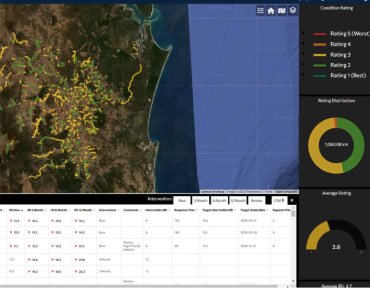
A service level framework only creates value when it is adopted across the organisation.
That means connecting the framework to inspection guides, maintenance planning, customer request processes, budget development, renewal planning and performance reporting. It also means making sure the people using the framework understand how it works and why it matters.
Over time, councils can continue strengthening the approach by reviewing road extents, validating data, improving asset segmentation, refining grading schedules, building staff capability and reporting performance in a way that is useful for different audiences.
The goal is not to create another complex system. The goal is to establish a clear link between field evidence, service levels, intervention triggers and maintenance decisions, so council leaders can stay in control of the network and explain priorities with confidence.
A clearer way to manage community expectations
Unsealed road maintenance will always involve difficult trade-offs.
There will never be unlimited budget, unlimited crews or perfect conditions. But councils can make those trade-offs more transparent, consistent and defensible.
A star rating approach gives councils a practical way to define what different roads are expected to provide, how maintenance priorities are determined and how decisions connect back to community outcomes.
For regional councils managing large and varied unsealed networks, this matters.
It helps shift the conversation from isolated requests to network-wide priorities, from reactive pressure to planned maintenance, and from uncertainty to clearer, more explainable decisions.
At SHEPHERD, we support councils to establish practical road management frameworks that connect condition evidence, service levels, maintenance planning and delivery.
If your council needs a clearer, more defensible way to manage unsealed road service levels, SHEPHERD can help establish the evidence, framework and processes needed to support better maintenance decisions. Get in touch at info@shepherdservices.com.au
Key Takeaways
★ Unsealed road expectations need a clear framework.
★ Service levels help councils explain priorities.
★ Data should inform decisions, not replace judgement.
★ Fit-for-purpose measures make maintenance more defensible.
★ Shared rules help reduce “squeaky wheel” decision-making.