

Natural disasters place intense pressure on councils to restore critical infrastructure quickly—often while navigating complex Disaster Recovery Funding Arrangements (DRFA). Traditional, manual approaches can slow approvals, delay funding, and extend recovery timelines when communities can least afford it.
Presented at the IPWEA NSW & ACT State Conference 2025, SHEPHERD’s paper Leveraging Advanced Technology for Rapid Disaster Recovery outlines a proven, technology-enabled DRFA approach already delivering faster approvals and earlier reconstruction outcomes for councils across Australia
Why Traditional DRFA Processes Struggle
DRFA relies on clear, defensible evidence of damage and eligibility. Common challenges for councils include:
- Time-consuming manual inspections
- Fragmented data stored across systems
- Difficulty demonstrating pre- and post-disaster condition
- Limited resources during peak disaster response
These issues directly impact submission quality, approval timeframes, and overall recovery speed.
A Smarter, Technology-Enabled DRFA Approach
SHEPHERD’s methodology integrates RACAS® (Road Asset Condition Assessment System), AI-supported defect identification, and GIS-based platforms to streamline the full DRFA lifecycle—from assessment through to delivery.
Key capabilities include:
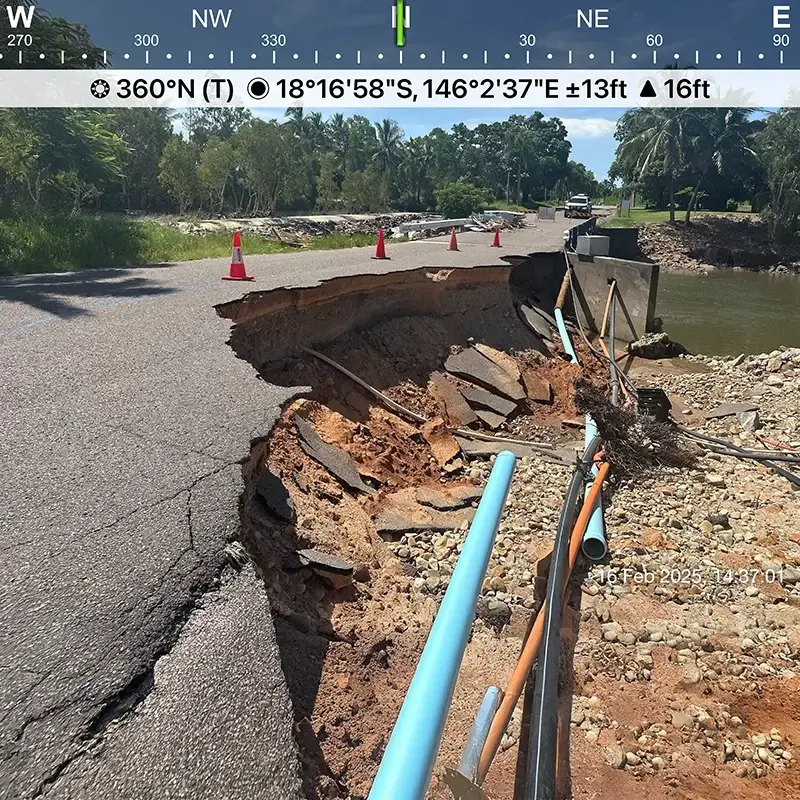
- GPS-tagged, metadata-rich imagery that exceeds DRFA evidence requirements
- Side-by-side pre- and post-event comparisons for rapid validation
- Built-in DRFA treatment logic aligned with state authority standards
- Cloud-based dashboards and mapping for real-time prioritisation and reporting
The result is a single, trusted dataset that supports emergency response, funding submissions, and reconstruction planning—without duplicating effort.
AI as a Practical Support Tool
AI plays a supporting role, helping inspectors identify potential defects faster while improving safety by reducing time spent on the road. The paper highlights that AI works best when paired with:
- High-quality imagery
- Clear reporting formats
- Professional review and engineering judgement
Used this way, AI improves efficiency without compromising DRFA defensibility.
Proven Results from Regional Councils
Gympie Regional Council
Following a major rain event, more than 3,000 damage points were captured across a 2,300 km road network within days—allowing priority works to be identified early and funding submissions lodged within the first month.
Cassowary Coast Regional Council
After Ex-Tropical Cyclone Jasper, $36 million in DRFA submissions were prepared in under three months, achieving a 93% average approval rate, with reconstruction well underway before the next wet season.
Readiness Before the Next Disaster
A clear message from the paper is that disaster recovery starts before the event. Councils with strong pre-disaster condition data are better positioned to:
- Secure funding faster
- Reduce disputes over eligibility
- Accelerate reconstruction delivery
Technology-enabled preparedness is now central to building resilient communities.
The accompanying PowerPoint presentation, Leveraging Advanced Technology for Rapid Disaster Recovery, is available to view or download, showcasing real-world workflows and case study outcomes
Key Takeaways
Faster DRFA approvals start with better data
Technology-enabled assessments deliver clearer, defensible submissions.
One dataset. Multiple outcomes
RACAS® supports DRFA, asset management, prioritisation, and delivery planning.
AI improves speed and safety
When paired with quality imagery and expert review, AI saves time without sacrificing compliance.
Prepared councils recover faster
Pre-disaster condition data significantly accelerates post-disaster funding and reconstruction.
Real results, not theory
Councils are already achieving 90%+ DRFA approval rates and earlier recovery milestones.