
Many councils know their roads need work but lack a clear, shared understanding of how much, where, and why. For Lithgow City Council, this challenge was amplified across a 1,200+ km sealed and unsealed road network, with engineering, finance, and elected members working from different perspectives and datasets.
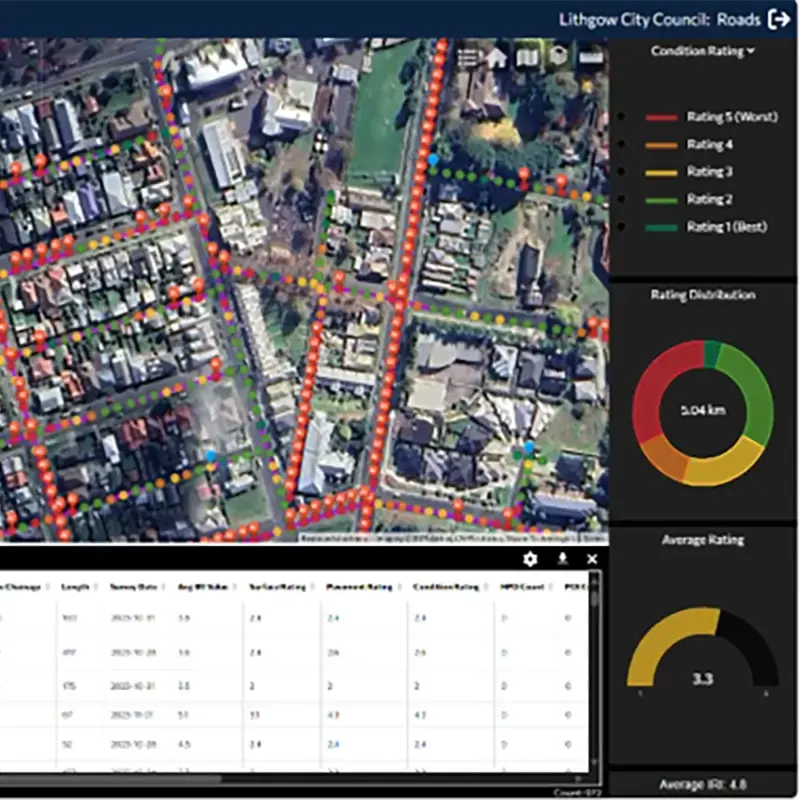
To address this, Lithgow deployed RACAS® (Road Asset Condition Assessment System) to establish a single, network-wide view of road condition and performance. What began as a condition assessment quickly became a catalyst for better conversations and stronger decision-making across the organisation
Creating a Single Source of Truth
By combining RACAS® data with targeted visual inspections, standardised condition scoring, and geospatial reporting, Council developed a clear, evidence-based baseline of its road network. This enabled:
- A prioritised 10-year road renewal program
- Forward budgeting aligned with actual condition and depreciation, not historical spend
- Network-level visibility of risk, backlog, and timing of intervention
The data shifted planning from isolated road discussions to a whole-of-network lens.
Turning Insight into Alignment
The most significant outcome was not technical, it was cultural. RACAS® provided a shared language that bridged long-standing silos:
- Engineers moved from reactive maintenance toward strategic, network-wide prioritisation
- Finance teams gained clarity on true funding needs based on asset condition
- Councillors engaged with clearer visuals and trade-offs, supporting informed, transparent decisions
This alignment allowed Council to move beyond anecdotal debates and focus on system-wide outcomes that balance technical risk, financial sustainability, and community expectations.
Planning for an Uncertain Future
As councils face increasing pressure from climate impacts, financial constraints, and ageing infrastructure, Lithgow’s experience highlights a critical lesson: better decisions start with shared evidence. RACAS® enabled honest, sometimes overdue conversations by translating complex engineering data into accessible insights that support long-term planning.
This presentation demonstrates how moving from fragmented data to a connected, network-based view is essential for sustainable, transparent infrastructure management, particularly in uncertain times
Presented at the 2025 IPWEA-QNT Annual Conference, the presentation, From Data to Decisions: How RACAS® Helped Lithgow Align Engineers, Finance, and Councillors, is available to view or download.
Key Takeaways
One network. One story.
A single source of truth aligned engineers, finance, and councillors.
From reactive to strategic
Condition data enabled long-term, network-wide renewal planning.
Finance grounded in reality
Budgets shifted from historical spend to condition-based need.
Clearer conversations with Council
Visual, spatial data improved understanding of trade-offs and priorities.
Better decisions under pressure
Shared evidence supports transparent, sustainable planning in uncertain times.